
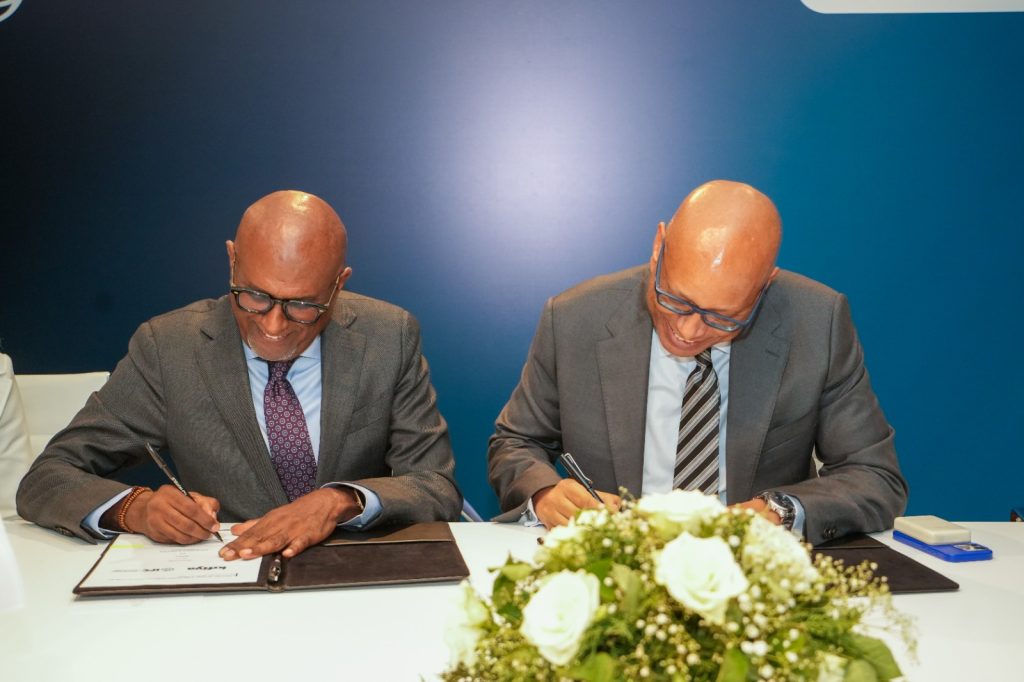
Announced at AFIS 2026, the investment will scale Kifiya’s AgFinTech and rural reach work, building on AI risk decisioning and financial infrastructure already behind more than US$1 billion in credit.
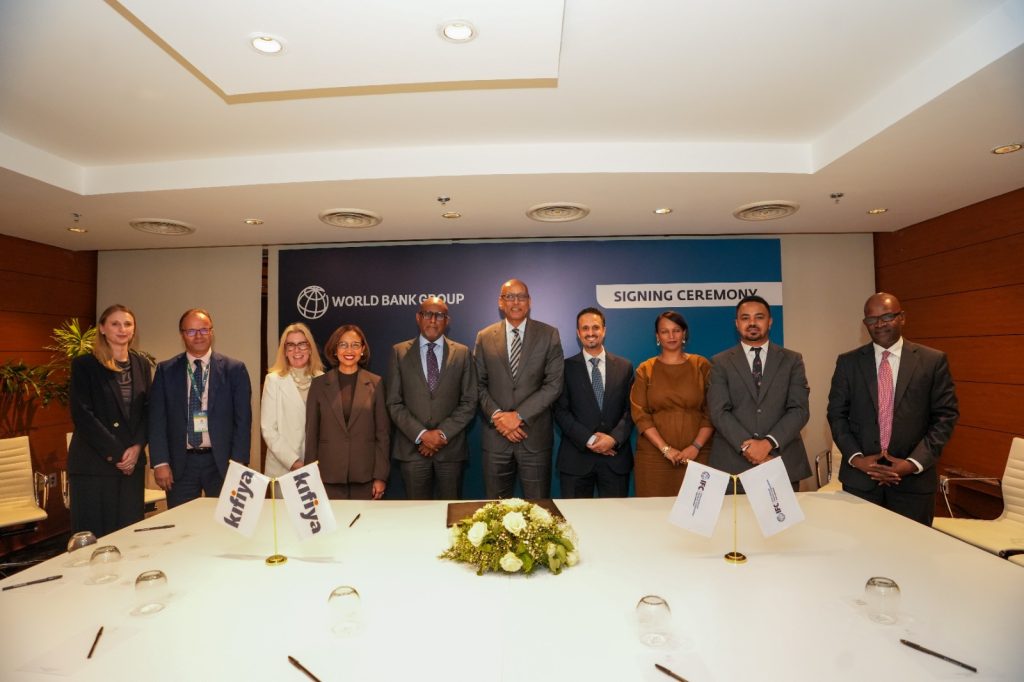
Luanda, Angola, November 4, 2026 – Kifiya Financial Technology PLC announced at the Africa Financial Summit (AFIS) that it has signed an investment agreement with IFC, a member of the World Bank Group. IFC’s first investment in Kifiya will scale the company’s AgFinTech and rural reach work, connecting smallholder farmers, agricultural microenterprises and other underserved businesses to finance and markets.
Kifiya’s four layers of tech infrastructure make them visible and financeable. Its Data & AI Infrastructure turns more than 42 data families and 10 billion alternative data signals into a risk profile for borrowers who have never been assessed before. Its Decisioning Infrastructure converts those profiles into decision-grade intelligence — risk scores, credit limits, fraud and climate risk, and portfolio monitoring — so institutions can lend to new customers while keeping full oversight of risk. Its Financial Infrastructure provides the rails to disburse and collect small loans digitally through agents and rural cooperatives, and its Market Infrastructure connects borrowers to buyers, suppliers and services. Partner institutions keep their capital, credit policy and customers; Kifiya provides the infrastructure that makes the lending possible.
In agriculture, this infrastructure profiles and credit-scores farmers, aggregates them, and enables their access to financial services, inputs, mechanization, advisory services and markets. Each service strengthens the others, so credit turns into lasting growth, while suppliers, traders and processors gain working capital.
IFC’s investment will enable Kifiya to scale its AgFinTech work in Ethiopia and support its expansion into new markets.
“Our purpose is to make Africa’s invisible economy investable. Farmers and microenterprises already produce, trade and create value, but much of that activity remains unseen by formal finance. We have built the AI and data infrastructure to make it visible and financeable, while supporting the orchestration and governance of capital,” said Munir Duri, Founder and Chief Executive Officer of Kifiya.
“Across Africa, too many farmers and entrepreneurs still lack access to the financing they need to grow. Technology can help close that gap. Through our investment in Kifiya, IFC is helping bring financing within reach of more farmers and entrepreneurs, so they can invest, create jobs, and build stronger livelihoods,” said Ethiopis Tafara, IFC Vice President for Africa.
The investment builds on IFC’s existing advisory work with Kifiya.
IFC’s 2026 report, Cracking the Credit Code, features Kifiya as a case study in how its alternative data scoring and digital lending infrastructure help banks serve informal enterprises and first-time borrowers.
With AI and tech hubs in Nairobi and Cape Town, Kifiya is in active expansion discussions in Rwanda, Uganda, Tanzania and Kenya. Its infrastructure is built once and configured for each market’s institutions, currency and regulation, bringing together financial institutions, technology partners and local distribution networks to connect more African enterprises with capital and markets.
About Kifiya
Kifiya Financial Technology is the AI and data-driven risk decisioning, financial and market infrastructure that brings Africa’s smallholder farmers and small businesses, long invisible to banks, into the formal financial and market system. Its infrastructure has enabled financing and insurance for 1.1 million MSMEs and smallholder farmers: more than 860,000 MSMEs and 230,000 farmers. Kifiya is headquartered in Addis Ababa, Ethiopia, with AI and technology hubs in Nairobi and Cape Town.
For more information, visit www.kifiya.com
About IFC
IFC — a member of the World Bank Group — is the largest global development institution focused on the private sector in emerging markets. We work in more than 100 countries, using our capital, expertise, and influence to create markets and opportunities in developing countries. In fiscal year 2026, IFC committed a record $105 billion to private companies and financial institutions in developing countries, leveraging private sector solutions and mobilizing private capital to create a world free of poverty on a livable planet. For more information, visit www.ifc.org.
Media contact
Woyneab Habte
Chief of Staff,
Kifiya Financial Technology PLC
Email: whabte@kifiya.com
Phone: +251 913 668 814
www.kifiya.com
