Kifiya is an AI ecosystem technology infrastructure company specializing in alternative data-driven decision making, intelligent financial, digital agriculture, and infrastructure. Since 2012 we have been innovating in building robust technological infrastructures and implementing transformative initiatives that address market failures. Kifiya enables micro, small, and medium enterprises (MSMEs), smallholder farmers, and low- to middle-income consumers access to appropriate and relevant financial services.
Kifiya Financial Technology is driving a major transformation in Ethiopia’s MSME lending ecosystem. Through its flagship Sustainable Access to Finance to Enable Entrepreneurship (SAFEE) program, it aims to unlock up to USD 300 million in uncollateralized loans for MSMEs from six partner banks. It aims to transform access to finance for women- and youth-led enterprises, driving financial inclusion and creating job opportunities for young people. This initiative is supported by a USD 75 million transitional liquidity and guarantee facility, along with a USD 25 million technical assistance facility. This will enable more than 477,861 MSMEs to access uncollateralized digital credit products, while providing 425,000 young women with access to mobile device financing. Over five years, the program is expected to create up to 2.18 million work opportunities for youth and support other initiatives to generate an additional 3.79 million job opportunities.
Kifiya actively supports informal businesses in their journey toward formalization. Since January 2024, 3,947 SAFEE loan recipients have successfully formalized their enterprises.
This progress is driven by SAFEE’s dedicated network of 68 Customer Acquisition & Relationship Executives referred to as Business Development Executives (BDEs), who provide hands-on support to both informal and formal businesses applying for uncollateralized loans.
Informal businesses with a kebele (neighbourhood) ID can start by accessing nano loans of up to ETB 10,000, with the average repayment period of 14 days. For those interested in scaling up, larger microloans are available, and they require formal business registration.
In these cases, the BDE team steps in to guide business owners through the formalization process, helping them understand the formalization requirements, prepare the necessary documents, and navigate challenges that these enterprises may face during the process. Once the required documents, such as a national ID or Fayda, are in place, formalization typically takes less than a week.
As a result of this hands-on support, since January 2024, 3,947 SAFEE-supported entrepreneurs have transitioned into the formal economy.
“
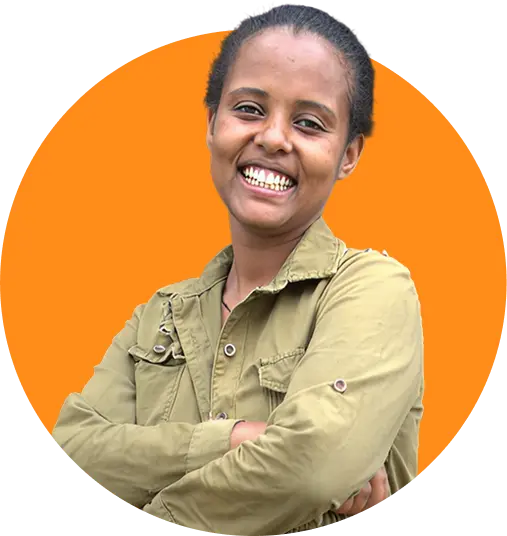
I was nervous about taking on debt, but I realized I needed to take a leap of faith if I wanted to achieve my dreams.
PROFILE Name: Hamelmal Gebremedhin Gebregiorgis
Region: Mekelle, Tigray
Age: 29 years
Business size: Micro
No. of employees: 1
Years in business: 6 years
Loan disbursed: ETB 144,302
Loan platform: Efoyta (Wegagen Bank)
As a mother of two and the wife of a broker, she relied heavily on personal savings and occasional support from family and friends to keep the business running. However, her weekly earnings ranged between ETB 300 and 400, leaving little room for savings or reinvestment, often only ETB 50 to 100 on a good week. Most of her income went towards daily supplies and paying for basic operating permits at a government-provided workspace for informal businesses.
Determined to improve her business and provide a more stable income for her family of four, Hamelmal used her savings to enhance her traditional coffee display and add a small table. Still, the unpredictability of outdoor vending and exposure to harsh weather made her dream of running a proper coffee shop seem distant, until October 2024, when she discovered the Efoyta digital lending platform.
Through Efoyta, Hamelmal accessed her first collateral-free nano loan of ETB 4,900, which marked a turning point in her business journey. Encouraged by early success, she took out five additional nano loans, each with a two-week repayment period. These small but impactful nano loans enabled her to expand her inventory, improve her coffee stand, and gradually build financial discipline and creditworthiness.
Each loan application was supported by a Kifiya BDE agent, who guided her through business formalization a crucial requirement for accessing larger loans. Her responsible repayment track record eventually qualified her for a microloan of ETB 27,000, which allowed her to rent a small house and open her first indoor coffee shop. A subsequent loan of ETB 30,000 totaling ETB 144,302 over 9 cycles, helped her to further strengthen her capacity.
Formalizing her business in November 2024 marked a critical milestone. Transitioning from a street stand to a licensed coffee shop not only provided her with a professional space to serve her customers but also enabled her to diversify her offerings, from traditional coffee to bottled water and sodas, broadening her appeal and increasing her daily sales.
Inspired to grow, Hamelmal pursued formalization, which brought valuable benefits such as legal recognition, enhanced credibility, and improved business planning. The process, however, was not without challenges; delays in document approval and frequent trips to the registration office made it a time-consuming experience. With guidance and support from a BDE agent, she was able to navigate these hurdles and successfully register her business.
With formalization came legal recognition, stronger credibility with suppliers and customers, and improved access to financial services. Though the process was time-consuming, marred by delays and repeated visits to the registration office, Hamelmal credits the BDE agent for providing step-by-step support and bridging the gap between informal entrepreneurs and formal institutions.
The transformation had tangible results. Her weekly revenue grew from ETB 800, before receiving the microloan, to ETB 2,100, with a 50% increase in profits. She now saves between ETB 300 and 500 weekly, which she reinvests in her business, including purchasing higher-quality materials and expanding her marketing efforts.
With the additional income from her business growth, Hamelmal increased her savings, benefiting both her family and also advocating for financial inclusion for the community.
Through these engagements, Hamelmal acquired skills in basic financial management. She learned how to handle loans responsibly, manage cash flow, and make informed decisions about reinvesting profits, demonstrating that even small profits can make a big difference.
These skills enabled her to plan more strategically, gradually expand her business, and build a stronger financial foundation. The hands-on support from BDEs gave her the tools to transition from short-term thinking to long-term business planning. Beyond financial literacy, Hamelmal’s confidence grew as she realized she could access credit and grow her business without relying on others or offering collateral. A BDE agent guided her step-by-step through the loan application process, showing her what documents were needed and how to qualify.
These skills enabled her to plan more strategically, gradually expand her business, and build a stronger financial foundation. The hands-on support from BDEs gave her the tools to transition from short-term thinking to long-term business planning. Beyond financial literacy, Hamelmal’s confidence grew as she realized she could access credit and grow her business without relying on others or offering collateral. A BDE agent guided her step-by-step through the loan application process, showing her what documents were needed and how to qualify.
With the help of the BDE agent, Hamelmal learned the importance of building discipline in saving and reinvesting. This gradual approach gave her the confidence to take calculated risks, such as applying for larger loans and investing in new products, without feeling overwhelmed or dependent on external help. The hands-on support Hamelmal received from the BDE agent in formalization was particularly crucial. As she put it: “Initially, I was uncertain about where to begin or whom to approach, but the agent guided me step by step.
Looking ahead, Hamelmal plans to expand her coffee shop into a more vibrant and welcoming space by adding more tables, introducing light snacks, and purchasing better coffee-making equipment. She also plans to hire an assistant, creating a job opportunity within her community.
But her ambitions don’t stop there. Her long-term dream is to open a second branch in a busier location and eventually establish a full-service restaurant where people can enjoy coffee and meals in a warm, family-friendly environment. This would not only grow her business but also create more jobs and contribute to the local economy.
Kifiya’s partnership with the Mastercard Foundation, the Sustainable Access to Finance to Enable Entrepreneurship (SAFEE)
program, aims to enable MSME growth and resilience by expanding financial inclusion and access to productive credit at scale.
To support these strategic shifts in the market, the SAFEE program targets four key objectives:
• Facilitate and enable MSME access to affordable uncollateralized finance through credit scoring and digital lending
• Enable the design of innovative and relevant financial products and services tailored to the specific needs of MSMEs
• Enable financial institutions (particularly Banks) to embrace non-collateral lending and allocate capital for MSME growth.
• Foster a robust enabling environment for technology adoption and digital solutions in the financial sector.

Email: info@kifiya.com
Phone: +251 116 671 579